
The international fresher’s Dutch dictionary
Coming from abroad? With these 18 words and expressions, you’re off to a good start

Photo: Shutterstock, DUB
Gezellig - guh-ZELL-ikh (sort of)
Our apologies for starting with a word that features the throaty Dutch G, which is challenging for most foreigners to pronounce. But trust us, you’ll hear this so many times during your studies that we bet you will master its pronunciation eventually.
Gezellig does not have an exact English translation, but it captures a universal feeling. Having a cup of coffee with a classmate in a candlelit café? That’s gezellig. Cooking dinner with your roommates and laughing until your belly hurts? Gezellig. A night out dancing with your friends? Gezellig. Staying home to play board games? Gezellig too. Basically, gezellig is a mix of “cosy” and “convivial”. It’s a word to describe places, people, and situations that make you feel all warm and fuzzy inside.
Fiets – Feets
Luckily, the word for the most beloved means of transportation in this country, the bike, is short, simple, and easy to pronounce. Also useful to learn: fietspad (FEETS-pohd), which means bike lane.

Photo: DUB
Doe normaal - doo nor-MAHL
Doe normaal is the Dutch emergency brake for anyone getting a little too dramatic, boastful, or ridiculous. It means “just act normally”. This expression reflects the Dutch cultural trait of finding those who stand out too much a little suspicious. Being down-to-earth and mindful of others is considered a virtue. If gezellig is a warm hug, then doe normaal is an eye roll.
Komt goed - komt hoot
Literally, this sentence means “it will be fine”. In practice, it means “don’t worry, things will sort themselves out.” It is usually said by that one person in the group assignment who hasn’t started their part of the work yet and doesn’t seem bothered that the deadline is tomorrow.
Borrel - BOR-uhl
A gezellig get-together with drinks and snacks, except you’re not meant to get drunk. Borrels are opportunities for socialising and networking. It’s about hanging out, not about getting hammered. Although borrels are intended as casual gatherings, their degree of formality varies according to who’s organising it. Your graduation ceremony at UU will be followed by a borrel, for example.
Feestje - FAYST-yuh
So, when is it socially acceptable to get drunk? Well, feel free to do that at a feestje. This is the Dutch word for “party.”
Proost! - prohst
A word that will be useful both at borrels and feestjes. It means “cheers!”
Lekker - LECK-uhr
We couldn’t define this word better than the former UCU student Rafaella Karadsheh in a DUB column published in 2021: “There isn’t any exact translation for this word, but it (roughly) translates to many words: good, tasty, nice. Because of its versatility, I’ve come to the conclusion that it can be applied to almost any context. Beer is good? Lekker biertje. Think someone’s hot? Ik vind je lekker (I find you attractive). Everything going well? Alles is lekker. You bike well? Ik fiets lekker. The possibilities are endless, and more recently I’ve found myself combining it with some English words (to the dismay of my Dutch friends).”
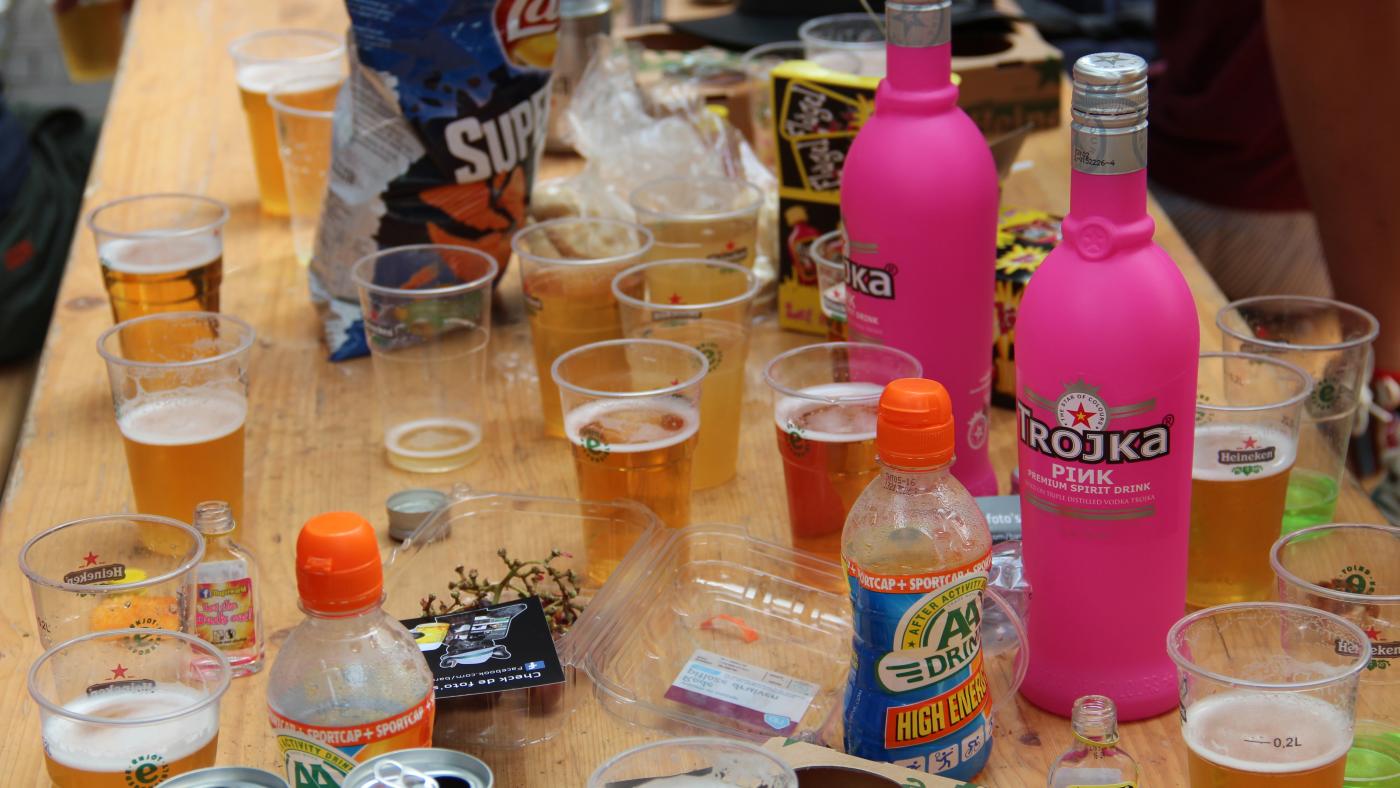
Photo: DUB
Top! - topp
Warning: this is pronounced differently from the English word “top”, which has a more open O. In Dutch, it means “great!” or “awesome!”
Prima - PREE-mah
Bear in mind, however, that the Dutch are a relatively restrained folk. Remember how being down to earth is considered a virtue? As a result, they are not keen on describing anything as awesome unless they consider it truly awesome (this may also explain why professors hardly ever grade anyone a perfect score). So, what do you say if something is not great, not awesome, just good enough? That’s when you use the word prima.
Succes! - sook-SESS
In terms of pronunciation, this is an easy one. It’s practically the same as its English equivalent. However, in Dutch, the word is usually employed as a send-off meaning “good luck”. If a Dutch classmate says “Ok, succes”, in a neutral tone, don’t be alarmed: it’s probably not mean or ironic, just a reflex.
Heb je alles kunnen vinden? - hehp yuh AH-luhs KUH-nuh VIND-uh
Wil je een tasje? - vihl yuh uhn TAH-shuh
Bonnetje mee? - BON-uh-tyuh may
So, you’ve learned how to say hello, thank you, please and goodbye, and you’re ready to go shopping for the first time. Everything goes well until the cashier starts asking you a bunch of questions in a row. Don’t panic; they’re probably using the three questions above. They just want to know whether you've found everything you were looking for, if you want a bag, and if you want a receipt.
Pinnen – PIN-uhn
The Dutch are very fond of paying with debit cards – so much so that some shops don’t even take credit cards here. A debit card is called a pinpas, and the verb for paying with a debit card is pinnen.

Photo: DUB archive
Spreekt u Engels? - spraykt oo ENG-uls
This is how you ask someone if they speak English (spoiler alert: they probably do. The Netherlands consistently tops the ranking of countries with the most people who speak English as a second language).
Ik spreek geen Nederlands - ik sprayk hayne NAY-der-lahnts
They will probably figure this out before you have to say this sentence, but just in case you need it, this is how to say “I don’t speak Dutch.”
Maakt niet uit - MAHKT neat OUT
As an international student, you’ll probably find yourself making a lot of accidental mistakes. Luckily, the Dutch word for “sorry” is easy-peasy-lemon-squeezy: exactly the same as in English, only pronounced with a closed O. When you apologise, people will probably answer with “maak niet uit”, which means “no big deal”.
For more words and expressions, check out this DUB article from 2024, in which we asked international students to share their favourite Dutch words and tell us why.
And if you want to learn even more, Utrecht University offers a free beginner's course focused on everyday situations. Sign-ups open online at the start of each semester. For more information, check your UU email.
Although you can get by with just English here, locals appreciate it when international students make an effort to speak Dutch. Going beyond a beginner's course can, therefore, help you make more Dutch friends. For more information about Dutch courses in Utrecht, visit this page.
Comments
We appreciate relevant and respectful responses. Responding to DUB can be done by logging into the site. You can do so by creating a DUB account or by using your Solis ID. Comments that do not comply with our game rules will be deleted. Please read our response policy before responding.