
Preliminary enrolment figures
Number of students in Dutch universities grows slightly
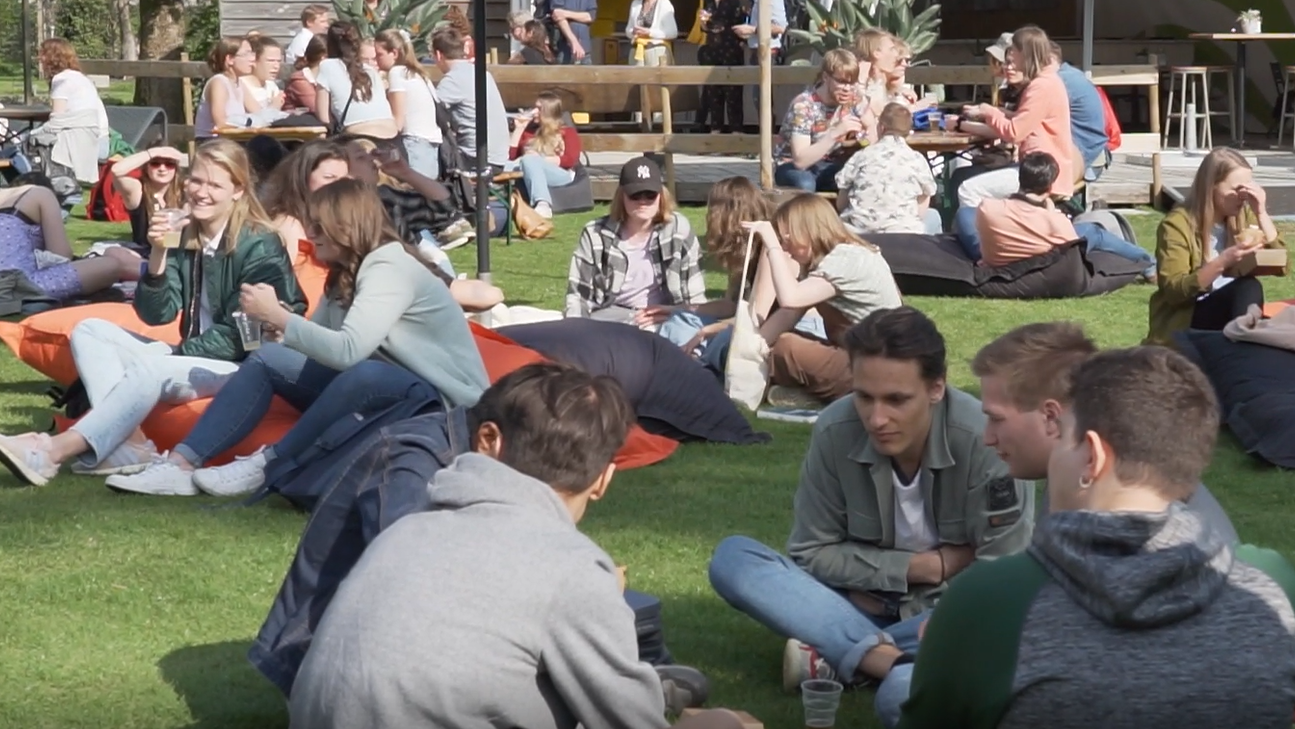
UU students gather during Wellbeing Week. Photo: DUB
“We're seeing an increase of a few percentage points in applications for bachelor’s programmes,” reports the spokesperson for the association of Dutch universities, UNL.
The spokesperson cannot say any more than that at the moment, as universities no longer wish to share figures on provisional applications. They believe that discussing preliminary figures generates confusion and offers little insight.
There is, therefore. no way to know which subject areas are growing, nor whether the growth is due to an increase in the number of international students.
Higher education institutions in the Netherlands will only publish the consolidated figures in early November. However, this figure will be subject to another check. The official figures, on which the Dutch government bases how much funding each university will receive, will be published only in the spring.
Universities of applied sciences
The number of first-year students appears to be rising in universities of applied sciences, especially in programmes like Social Work, Applied Psychology and Pedagogy. Social studies programmes may have attracted 10,800 first-year students, compared with just over 10,000 last year.
Healthcare programmes are also on the rise, according to the latest count of "pre-enrolments". These programmes are expected to attract around 350 more first-year students than they did last year.
It should be stressed once again that these are preliminary figures. Last year’s 122,000 provisional applications ultimately resulted in just 84,000 freshers.
All in all, universities of applied sciences had roughly the same number of provisional applications as last year, but the distribution across study programmes is not quite the same. Teacher training programmes are losing ground compared with last year, for example.
These preliminary applications also include students changing courses — something roughly one in five students in higher professional education do. However, they will not be counted as "first-year students" in the official figures.
Decline
The higher education sector expects the number of Dutch students to decline over the next few years because the number of young people is declining in the Netherlands. The outlying regions of the country are expected to suffer from this decline more intensely, which is why some politicians intend to adjust the funding model for the higher education sector, which is based on the number of students enrolled. Such adjustments have already been made at the vocational education level (MBO).
This decline can be partly offset by international students, but many politicians in the House of Representatives have reservations. To avoid strict regulations, universities and universities of applied sciences have promised to adopt mechanisms to keep the influx of international students under control.
Comments
We appreciate relevant and respectful responses. Responding to DUB can be done by logging into the site. You can do so by creating a DUB account or by using your Solis ID. Comments that do not comply with our game rules will be deleted. Please read our response policy before responding.