
Misleading degrees
Terms 'bachelor’s' and 'master’s' not adequately protected
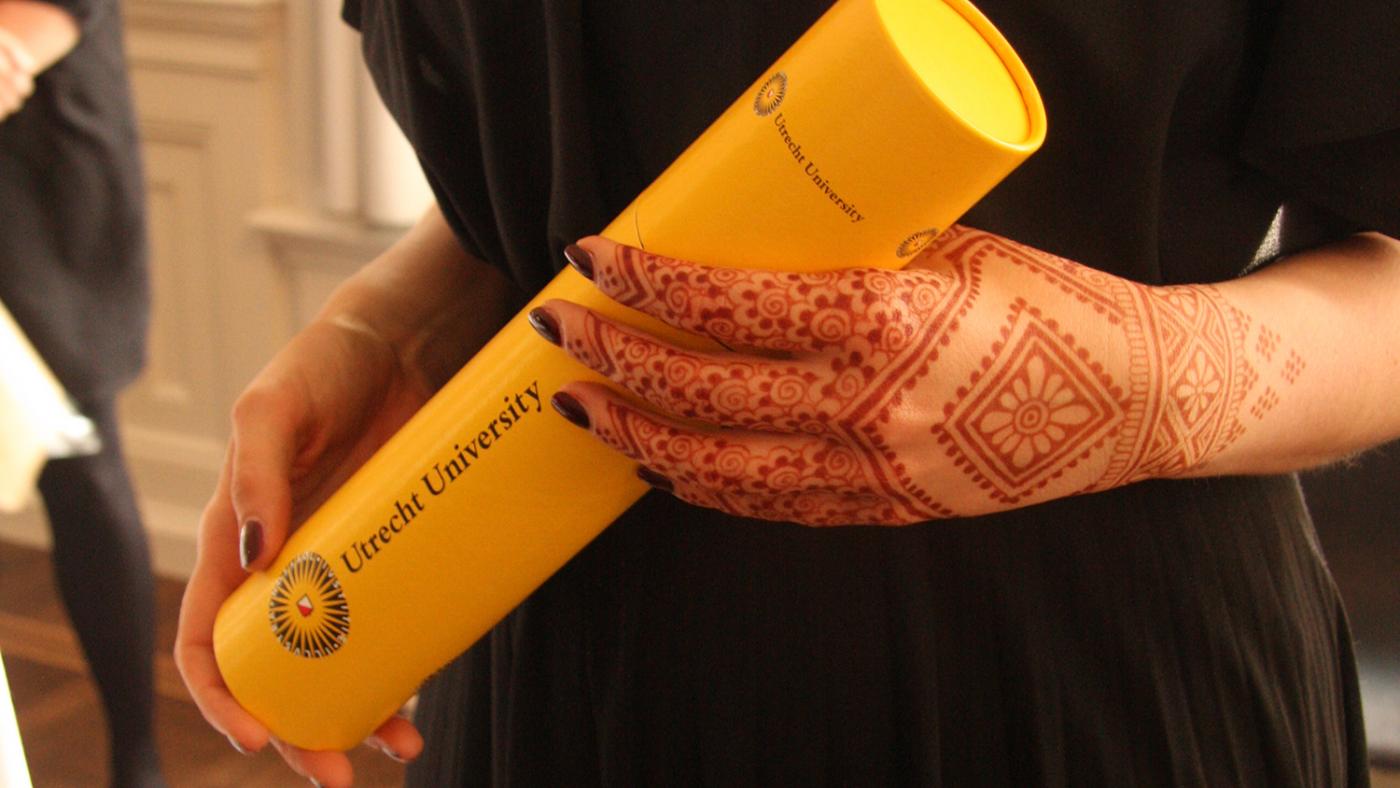
Photo: DUB
NCOI University of Applied Sciences and twelve other private institutions won a legal case over the use of terms like "bachelor’s" and "master’s". The Education Inspectorate imposed fines for misleading advertising, but the Council of State did not uphold the decision on appeal.
In the Netherlands, degrees such as ‘bachelor’ and ‘master’ are protected, but the court said the law is not clear enough about the names of study programmes. If you make it clear that no official master’s degree is attached to the programme, then, according to this court, you may include an ‘executive master’, ‘professional master’, or any other self-coined term on a diploma.
For years, the Education Inspectorate has been trying to prevent prospective students and employers from being misled through warnings and fines: the stance has been that education providers may not simply award master’s or bachelor’s degrees.
The judge has therefore overturned that policy. According to the ruling, as long as you are not replicating a recognised degree programme (such as a Bachelor’s in Nursing) and as long as you do not claim government recognition, you are not awarding a protected degree.
Minister Letschert
Education Minister Rianne Letschert has announced that the government will reimburse the fines imposed. “I take the ruling extremely seriously,” she says in a written response. “The law is intended to protect the reputation of higher education and to prevent the misleading of students and employers. This is and remains important.”
She will also consult with the inspectorate to assess “whether certain standards in the law need to be clarified”. In other words, she is considering amending the law.
House of Representatives
Sandra Beckerman (SP), a Member of the House of Representatives, has already drawn her conclusions: “This strikes me as a very dangerous step towards the further commercialisation of education,” she says. “Private educational institutions can continue to issue qualifications that appear misleading.”
The court apparently permits the use of “almost identical and therefore deliberately misleading” course names, she says. “This calls for a thorough analysis by the minister to determine how the law needs to be amended to safeguard the awarding of degrees.”
D66, one of the parties in the cabinet, is also taken aback by the ruling. “I find it deeply troubling that titles can be invented which are virtually indistinguishable to students from officially recognised master’s degrees,” says MP Ilana Rooderkerk. “Students must be able to trust that a master’s degree actually represents a recognised programme and a specific level of education. If current legislation does not provide sufficient protection against this, we must look into it. Students must never be the ones to suffer as a result.”
Students
The National Students’ Union strongly opposes the ruling. Chair Evy Kras: “It is ridiculous that ‘bachelor’ and ‘master’ are not protected terms on a degree certificate and that people can be misled so easily. Students deserve clarity.” She fears an inflation of titles such as ‘bachelor’ and ‘master’.
Kras points out that the inspectorate already found it difficult to enforce the rules, such as when programmes give the impression that they are accredited but do not state this explicitly anywhere. “In such cases, the inspectorate would send letters to the institutions asking them to clarify the information. And now it will be even harder to do anything about it.”
The National Student Association anticipates a proliferation of programmes that will start calling themselves master’s programmes, says chair Allis Richardson. “Students often associate the term ‘Master’s’ with an officially recognised programme. If non-accredited programmes are allowed to use this term, it could lead to confusion.”
Inspectorate responds
In the Netherlands, an official degree (such as a bachelor’s or master’s) may only be awarded if the programme has been approved by the Dutch Research Council (NVAO), a quality assurance body. The Education Inspectorate concluded that a programme may not call itself a bachelor’s or master’s programme if the NVAO has not accredited it.
The Inspectorate therefore imposed fines on programmes which, in its view, had overstepped the mark. This work is now in limbo. “We will carefully study the ruling of the Council of State and assess what it means for our work,” a statement said.
The Inspectorate also states: “Our task is to safeguard the quality of education and to protect not only students but also employers from misleading information regarding qualifications. A reliable education system is essential for the reputation of higher education as a whole.” The Inspectorate will enter into discussions with the minister regarding tightening up the law, “so that we can continue to carry out our supervisory role effectively.”
Universities and universities of applied sciences
The association of Dutch universities, UNL, emphasises “that there must always be clarity regarding the quality and status of a degree programme and the degree associated with it”.
The association will examine the ruling, but has already stated that “Dutch higher education is of high quality and enjoys a strong reputation both nationally and internationally. It is important to safeguard that quality and the trust placed in it.”
The Association of Universities of Applied Sciences takes the same line. “It is important that students, graduates, institutions, organisations, businesses and educational establishments can all rely on the fact that the quality and official status of a degree programme, and the qualification associated with it, are clear,” it states in a response.
NCOI University of Applied Sciences
For now, the private education provider NCOI appears to be the only one satisfied with the court’s ruling. A press release states: “The diplomas issued were correct and did not give the impression that a degree had been awarded. Diplomas from an accredited NCOI master’s programme explicitly state that a master’s degree has been obtained. This was not stated on the diplomas that were the subject of these proceedings.” Yet the word ‘master’ did appear in the programme names and on the diplomas.
Perhaps NCOI and other providers will expand their offer of such programmes. The press release states: “For NCOI, the ruling is also significant for the further development of flexible education in the Netherlands.”
Comments
We appreciate relevant and respectful responses. Responding to DUB can be done by logging into the site. You can do so by creating a DUB account or by using your Solis ID. Comments that do not comply with our game rules will be deleted. Please read our response policy before responding.