
Fraud is too easy
Ticking the wrong box results in hundreds of euros in basic grant
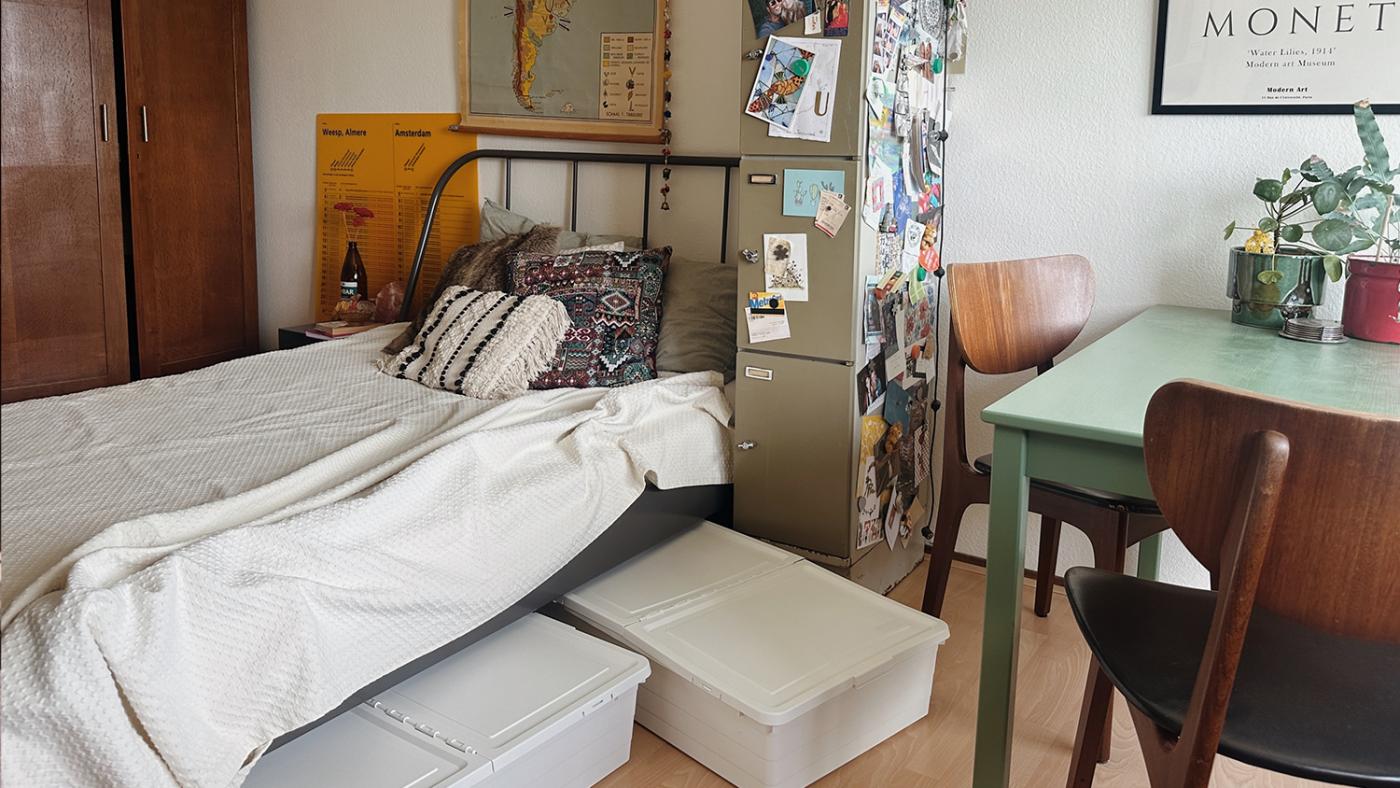
Do you live at home or away from home? It makes a difference to your basic grant each month, photo: DUB
Students living in halls of residence receive a higher grant than those living at home: a difference of nearly two hundred euros a month. Students can exploit this.
DUO, the organisation responsible for student finance in the Netherlands, tried to combat this, but in doing so mainly checked students from migrant backgrounds. This constituted indirect discrimination. Moreover, the checks themselves were flawed and the evidence of fraud was often weak. This was revealed in 2023 by research carried out by the Higher Education Press Agency (HOP) in collaboration with Investico, NOSop3 and the daily newspaper Trouw.
Work is now underway on a new monitoring system, which is due to be launched during the course of the next academic year. The focus is also on prevention: how can students be encouraged to commit less fraud? Research into this has been carried out on behalf of the Ministry of Education, Culture and Science (OCW). The results were sent to the House of Representatives on Tuesday.
Tick the ‘living away from home’ box
According to the researchers, it is currently too easy to commit fraud. Students simply need to register with the local council elsewhere and then tick the ‘living away from home’ box. Furthermore, they consider the likelihood of checks to be low. The higher grant is also often seen as ‘easy extra money’.
The researchers also propose possible solutions. The report states that many people want to maintain a positive image of themselves. If they have to make a more conscious decision to commit fraud, they find this unpleasant.
They therefore recommend setting the ‘living at home’ grant as the default. Students who wish to receive the ‘living away from home’ grant would then have to actively change this setting and enter their address. This would force them to give their choice some thought.
Checks help
It also helps if students are more aware that they may be subject to checks. So provide them with better information on this. However, the researchers do warn that if DUO carries out these checks too frequently, this may be perceived as ‘hostile and unfair’ and have the opposite effect.
Finally, according to the researchers, it is important that students no longer regard the higher grant as ‘easy extra money’. This is a matter of framing, the researchers argue. The away-from-home grant should not be seen as a reward, but as compensation for the additional costs.
Comments
We appreciate relevant and respectful responses. Responding to DUB can be done by logging into the site. You can do so by creating a DUB account or by using your Solis ID. Comments that do not comply with our game rules will be deleted. Please read our response policy before responding.