
Manufacturer Monsanto contributed to the writing
Research into glyphosate by late UU professor retracted
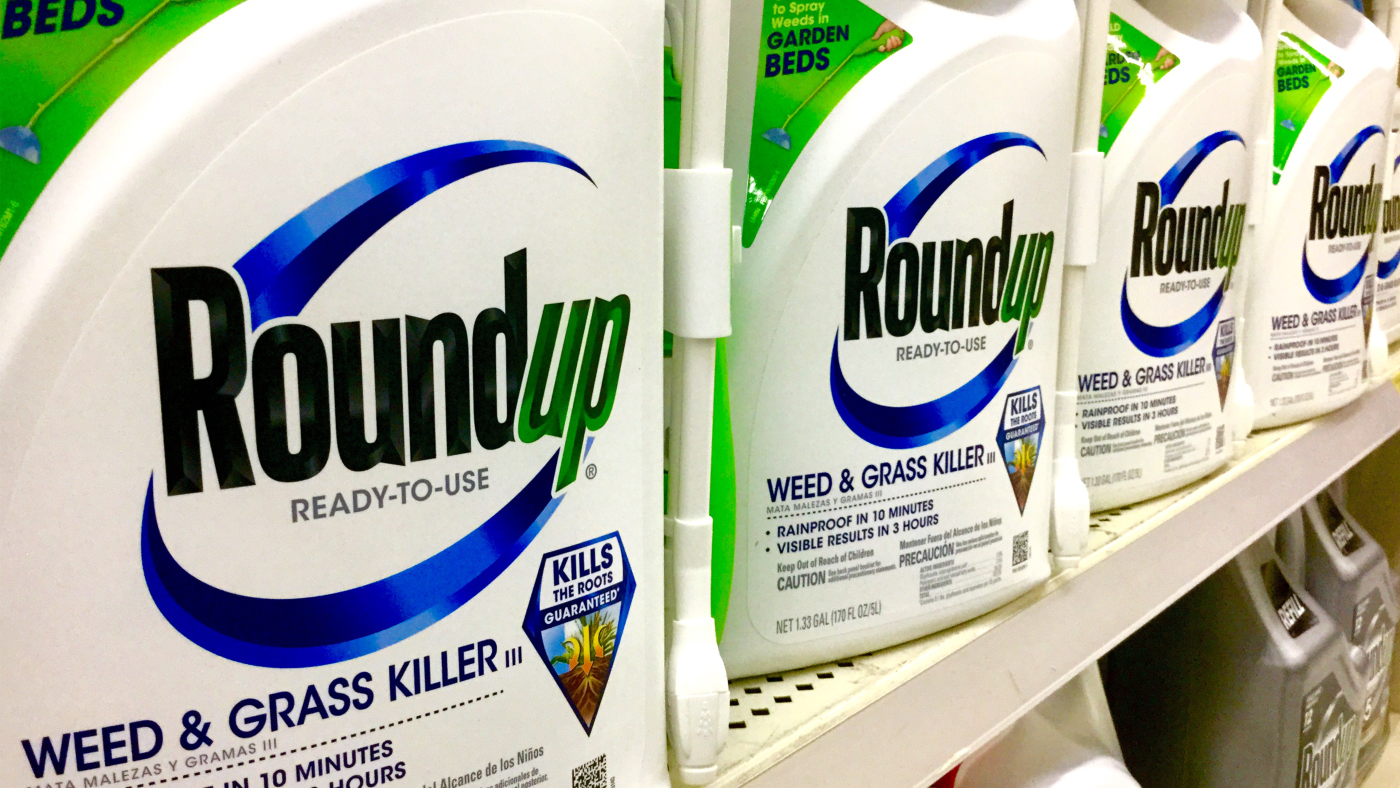
Photo: Flickr
For decades, the retracted study has influenced the debate on the health effects of glyphosate, as well as the regulation and decision-making regarding the use of weed killer Roundup in agriculture.
Kroes was one of the three authors of the study. He was a renowned scientist and a professor of Biological Toxicology at Utrecht University. He also served as a toxicologist at the National Institute for Public Health and the Environment (RIVM). Kroes passed away in 2006.
The now retracted study was published 25 years ago in the scientific journal Regulatory Toxicology and Pharmacology, of which Martin van den Berg, professor emeritus of toxicology at Utrecht University, has been editor-in-chief since 2019. Van den Berg retracted the article at the end of November when it emerged that Monsanto, the manufacturer that marketed glyphosate under the name Roundup, had co-authored the study. According to the editor-in-chief, this compromised academic independence.
Researchers' names added
Correspondence from Monsanto used in a court case in the United States revealed that the scientists did not write the content themselves. Instead, the article was written by Monsanto employees who were not listed as co-authors.
In an email about another scientific study, Monsanto employees suggested writing parts of the study themselves and adding the researchers' names later. An excerpt from the email reads: "(...)we would be keeping the cost down by us doing the writing and they would just edit & sign their names so to speak. Recall that is how we handled Williams Kroes & Munro, 2000.'
Cherry picking
According to Van den Berg, it is almost certain that the scientists were paid by Monsanto, without being transparent about this. "The authors were also selective in citing research on the carcinogenic effects of glyphosate. At the time, five other studies were known to the industry. These were not peer-reviewed, but the researchers give no explanation as to why they did not use these studies." Kroes and colleagues based their conclusion on data from Monsanto itself, which is also not peer-reviewed. According to the editor-in-chief, this constitutes cherry picking.
Guidelines
Earlier this year, Harvard scientists who examined Monsanto's documents in the American court case advised editor-in-chief Van den Berg to consider retracting the article. Van den Berg then tested the research against the guidelines of scientific journal publishers.
"The scientific quality was not there. This means that the editor-in-chief no longer has confidence in the article's scientific quality and integrity, end of story. I had two options: write a notice of concern, a milder version in which I would indicate that I am concerned about certain aspects of the article, or extract it. In this case, it was obvious that extraction was justified."
Renowned researcher
Van den Berg, who is an emeritus professor at Utrecht University, paused for a moment when DUB asked him about the role of his former colleague, Robert Kroes. He indicated that he had not noticed any of this before and that he knew Kroes as a "highly skilled toxicologist". Van den Berg: "It came as a complete surprise. I had no idea that this could be an issue until I received the data from the Harvard scientists. I knew Kroes well and have a great appreciation for the work he has done. Given Kroes' reputation, there was no reason for me to expect this as an editor-in-chief."
Following this case, Van den Berg decided to subject all studies in his journal involving Monsanto to further investigation. To his knowledge, Kroes was not involved in those other studies.
Executive Board reacts
The Executive Board has taken note of the journal's decision to retract the publication. The board appreciates that this step has been taken and shared publicly. "It is obviously detrimental to society's trust in science if research results are manipulated or incomplete, as may have been the case here. It is important to keep a close eye on scientific integrity and, if there are any doubts, investigate them and take action where necessary."
The Executive Board deems scientific integrity essential. "The university brings knowledge from outside and collaborates with other universities, research institutes, companies and social partners. This raises dilemmas, such as who to work with and under what conditions." The university strives to safeguard scientific integrity in its collaborations with external partners by applying "existing codes of conduct and regulations".
Comments
We appreciate relevant and respectful responses. Responding to DUB can be done by logging into the site. You can do so by creating a DUB account or by using your Solis ID. Comments that do not comply with our game rules will be deleted. Please read our response policy before responding.